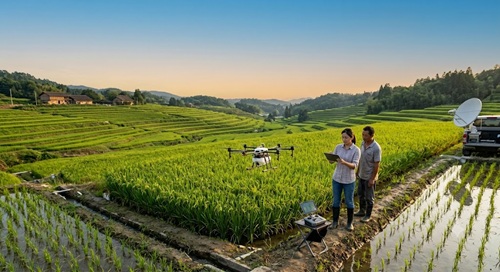
Climate change is significantly altering the dynamics of food production and safety, with mycotoxin contamination emerging as a critical and intensifying threat. Mycotoxins are toxic secondary metabolites produced primarily by fungi of the genera Aspergillus, Fusarium, and Penicillium. Their increased prevalence and distribution are closely linked to changing climatic variables such as elevated temperatures, extended droughts, shifting rainfall patterns, flooding, and increased humidity which are ideal conditions that promote fungal proliferation and mycotoxin production. Furthermore, these toxic compounds pose a serious risk to food safety and security, national and international trade, and public health.
Mycotoxins are known to contaminate a wide array of crops including maize, rice, wheat, groundnuts, tree nuts, and spices all of which are staples in global and regional food systems. Key mycotoxins of concern include aflatoxins, fumonisins, ochratoxin A, zearalenone, and trichothecenes. Chronic dietary exposure to these mycotoxins, in humans and animals, is associated with hepatotoxicity, nephrotoxicity, immunosuppression, carcinogenicity, growth impairment, and even death in severe exposures. The Food and Agriculture Organization (FAO) estimates that up to 25% of the world’s crops are affected by mycotoxins annually, resulting in massive economic losses and increased food insecurity.
As agroecological zones shift, regions not previously categorised as high-risk for mycotoxin outbreaks are now experiencing elevated contamination levels and diversity in mycotoxin contamination. This has direct consequences for food security, especially in tropical and subtropical regions where postharvest infrastructure is often limited, and climate variability is high.
As if the threat of mycotoxins is not already severe, the agricultural landscape is further complicated by the emergence of masked mycotoxins which are conjugated forms of mycotoxins bound to plant metabolites, and not detectable by conventional analytical methods. These compounds, such as zearalenone-14-glucoside or DON-3-glucoside, can be hydrolysed in the gastrointestinal tract, further releasing their toxic parent compounds, and contributing to underestimation of exposure in food safety assessments. Not only that, emerging mycotoxins like moniliformin, enniatins, and beauvericin, which are produced by lesser-studied Fusarium and Alternaria species, are increasingly being detected in global food chains, although their toxicological significance is still under investigation. These developments thus warrant for urgent and advanced detection technologies, risk assessment models that incorporate masked and emerging mycotoxins, and proactive regulatory frameworks to manage both known and unknown risks to food safety and security.
Mitigating mycotoxin risks requires a multi-stakeholder approach and coordinated interventions across the entire food chain. Firstly, producers and farmers are encouraged to implement Good Agricultural Practices (GAP), including appropriate crop rotation, timely harvesting, adequate drying, proper storage conditions, and proper irrigation. Improved crop varieties that are drought-tolerant or fungal-resistant are also key tools. Secondly, policy makers must strengthen regulatory frameworks, improve risk communication, support public education campaigns, and allocate resources for surveillance, laboratory capacity building, and farmer training. Harmonisation with Codex Alimentarius standards is essential to facilitate safe trade and public health protection. In Malaysia, for example, mycotoxin limits are regulated under the Malaysian Food Regulations 1985. However, enforcement must be matched with investment in testing capacity and postharvest infrastructure. Thirdly, researchers and laboratories must continue advancing early detection tools, climate-based predictive models, and novel biocontrol approaches tailored to specific agroecosystems.
In recent years, biological control has emerged as a sustainable and environmentally friendly alternative to conventional methods such as physical control and chemical control. One promising strategy involves the application of non-aflatoxigenic strains of Aspergillus flavus to competitively exclude aflatoxin-producing strains in crops such as maize by competing for nutrients and niche/habitat in the same agroecosystems. This method has demonstrated efficacy in reducing aflatoxin levels under field conditions in Africa, and is currently under pilot evaluation in parts of Asia.
In addition to microbial antagonists, fungal extrolites, which are secondary metabolites produced by non-mycotoxigenic or antagonistic fungi, have shown potential in suppressing the growth of mycotoxigenic fungi and inhibiting mycotoxin production. For example, metabolites produced by non-aflatoxigenic strains of Aspergillus flavus and certain species of the mycoparasitic Trichoderma, exhibit antifungal activity, and can interfere with the expression of mycotoxin biosynthetic gene clusters in Fusarium and Aspergillus. Further research is ongoing to identify, isolate, and formulate these extrolites into bioactive agents that can be integrated into pre- and postharvest management strategies. Their specificity, environmental safety, and multifunctional roles make them attractive candidates in the development of next-generation biocontrol tools.
The intersection of climate change, mycotoxin contamination, and food security presents a complex and evolving challenge. Scientific advancements, particularly in biological control and fungal metabolite research, hold significant promise. However, a multisectoral and interdisciplinary approach is essential which involves collaboration among producers, regulators, researchers, and consumers to safeguard food safety and public health in a rapidly changing global environment. With scientific innovation, sound policies, and farmer engagement, we can protect our food supply, and ensure that what nourishes us does not also harm us.
This article is written by Assoc. Prof. Dr. Nik Iskandar Putra Samsudin. He is the research associate at the Laboratory of Food Safety and Integrity, ITAFoS. He is also an associate professor at the Food Science Department, Faculty of Food Science and Technology, UPM. Email: nikiskandar@upm.edu.my
Date of Input: 02/03/2026 | Updated: 02/03/2026 | noordiana
MEDIA SHARING