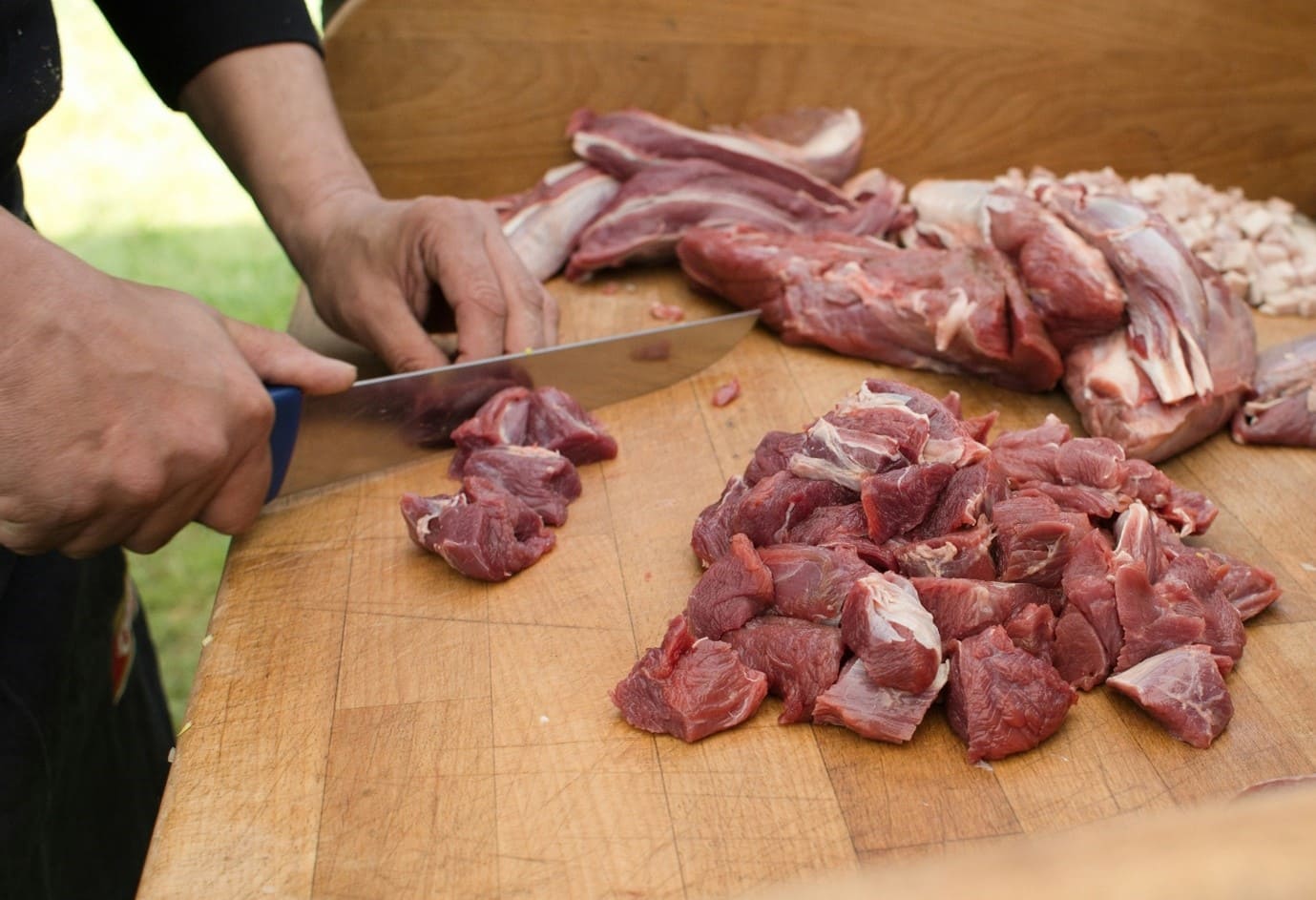
As we all know, Eid al-Adha is approaching. This is a time for Muslims to reflect upon and commemorate the obedience of Prophet Ibrahim (AS) in his willingness to sacrifice his son, Prophet Ismail (AS), following Allah SWT's command. During the celebration of Eid al-Adha, capable Muslims perform the Qurban ritual by slaughtering livestock such as cows, goats, or camels. The meat from the sacrifice is then distributed to those in need, including the poor, neighbours, and relatives.
However, food poisoning and spoiled food are often reported during festive seasons. This highlights the importance of being more mindful and attentive to food hygiene and safety, especially when handling food during the festive period. By following the safety steps outlined below, food poisoning cases and wastage caused by spoiled food can be minimized.
First and foremost, the slaughtering process must be conducted hygienically. Tools such as knives, ropes, knife sharpeners, tables for processing meat, weighing scales, and meat storage containers must be kept clean. The slaughtering process should be carried out in a clean area, and handlers must avoid cross-contamination between the meat and other components such as blood and organs, particularly the stomach, which contains many bacteria. Animal waste and bones must also be properly managed to avoid attracting pests and causing unpleasant smells or sights.
Next, after the slaughtering process, Qurban meat should be immediately stored at a cool temperature before being placed in the refrigerator. This prevents bacterial growth and enhances the quality of the meat. This process, known as meat resting, allows the muscle fibers to relax, resulting in better texture. After being cooled for a day, the meat can be frozen if it is not to be cooked immediately. Meat should also be stored in clean containers and divided into portions to avoid repeated thawing and freezing.
As is customary, the sacrificed meat is distributed to people nearby. To ensure safe distribution, the plastic bags or containers used must be clean and of food-grade quality. The distribution process should be done promptly, and the meat should not be left uncovered or exposed to high temperatures for long periods.
Once stored in the freezer, the meat must undergo proper thawing before cooking. The simplest method is to thaw it in the refrigerator. For instance, if you plan to cook the meat the next day, move it from the freezer to the refrigerator overnight, allowing it to thaw slowly over 10 to 18 hours. Additionally, meat can be thawed under running water until softened or using a microwave on the defrost setting. Once thawed, the meat should be cooked immediately and not left at room temperature for extended periods to prevent bacterial growth.
Cooking the meat properly is also crucial. The internal temperature of small meat cuts should reach 70ºC. If the meat is cooked for two separate meals, such as lunch and dinner, the portion for dinner should be kept in a different container and stored in the refrigerator. Simply reheat the portion before consuming. Proper cooking and storage techniques are essential to avoid food spoilage, food poisoning, or wastage.
Finally, food handlers must maintain personal hygiene, such as washing hands thoroughly and using clean cooking utensils. Food waste should also be disposed of correctly to ensure a clean environment. By practicing these food safety tips, we can ensure the cleanliness and quality of Qurban meat and the meals prepared from it. Not only does this protect the health of consumers, but it also reflects positive values such as care, responsibility, and respect, which are integral to the Qurban ritual.
This article was written by Dr. Noor Azira Abdul Mutalib. She is a Senior Lecturer at the Department of Food Service and Management, Faculty of Food Science and Technology, Universiti Putra Malaysia. She is also a Research Associate at the Laboratory of Food Safety and Food Integrity, Institute of Tropical Agriculture and Food Security, Universiti Putra Malaysia. She can be contacted via this email address: n_azira@upm.edu.my
Date of Input: 03/06/2025 | Updated: 03/06/2025 | noordiana
MEDIA SHARING