The Role of Remote Sensing Technology in Global Food Security
Food security has become a primary global focus due to unpredictable climate change, world population growth, and supply chain disruptions. Over the past few decades, the global population has exceeded 7.5 billion, with the majority residing in urban areas. However, 700 million people across 76 countries are still food insecure. This population growth has put immense pressure on food and water resources. Global food production must increase by 50% to meet the demands of the projected world population by 2050. Food security refers not only to the availability of sufficient food supplies, but also encompasses its access, accessibility, and long-term stability.
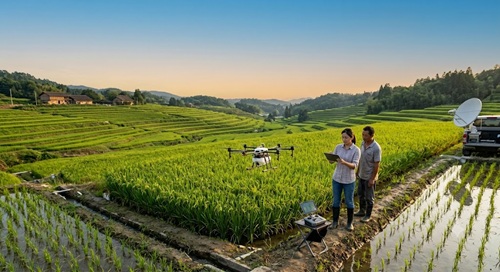
To address these challenges, the agricultural sector can no longer rely solely on traditional methods. This is where remote sensing technology plays a vital role as a game-changer. Remote sensing is a technology that collects information about the Earth's surface from a distance—mostly using sensors mounted on satellites, aircraft, or drones (UAVs). These sensors capture reflected light (such as visible light and infrared rays) from crops and soil to analyze plant health and conditions in real-time.
Among the key applications of Remote Sensing Technology in Food Security that help strengthen food security are across several main domains:
1. Crop Health Monitoring & NDVI Index
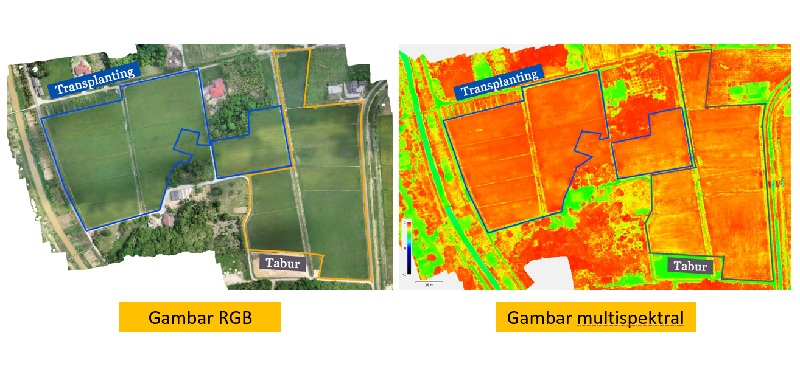
Using the Normalized Difference Vegetation Index (NDVI), satellite sensors can distinguish between healthy and poor crops. Healthy green vegetation absorbs more red light and reflects more near-infrared (NIR) light. The benefit is that farmers can detect nutrient deficiencies or disease outbreaks earlier before physical signs of damage become visible to the naked eye.
2. Crop Yield Prediction
By combining historical remote sensing data, weather patterns, and crop growth models, governments and international bodies can predict seasonal harvest yields. This helps authorities plan food supply imports/exports accurately and prevent hunger crises or sudden price spikes.
3. Water Resource & Irrigation Management
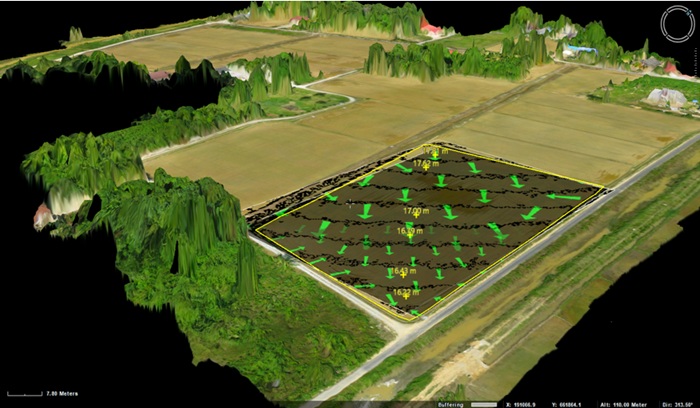
Thermal sensors on satellites can measure soil moisture and crop evapotranspiration. With this, farmers and growers can execute precise and structured irrigation. For example, directing water only to areas that need it, thereby conserving national water resources. Additionally, uneven ground surfaces can be detected using UAV technology, helping to prevent uneven crop growth or waterlogging caused by irregular terrain.
4. Early Warning Systems for Natural Disasters & Climate Change
Satellite imagery or drones can assist in monitoring areas prone to floods, prolonged droughts, or pest and disease infestations. Through this technology, early warnings can be provided to farming communities so they can take mitigation measures before large-scale destruction occurs.
5. Saving Time and Labor
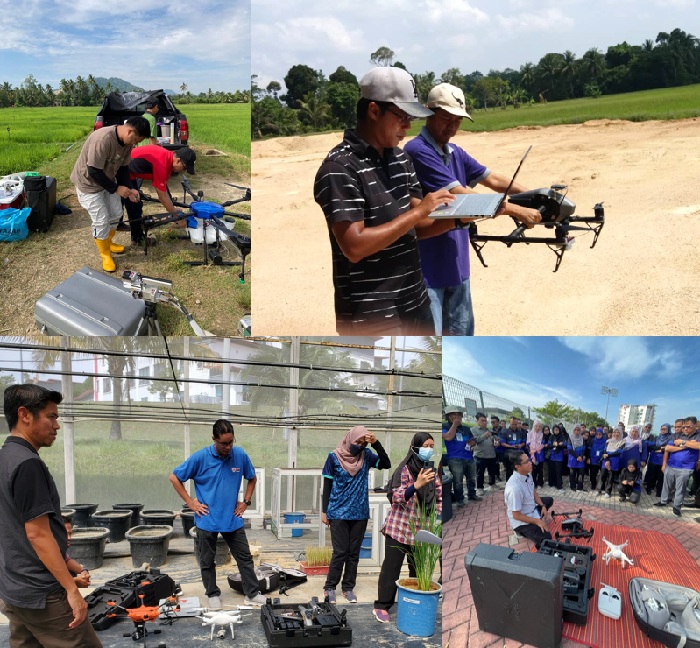
The use of spraying drones (for seeds, fertilizers, and pesticides) in farming increases operational efficiency while saving human time and effort. A drone can spray an area of 1 to 2 hectares in about 10–15 minutes, compared to manual methods that take an entire day. Furthermore, comprehensive coverage using GPS navigation ensures every corner of the field is sprayed evenly without missing any spots. Farmers also no longer need to carry heavy chemical tanks and walk-through fields, as drone operations are controlled remotely, reducing the risk of inhaling, or direct contact with hazardous chemicals.
Conclusion
Remote Sensing technology can transform the agricultural landscape from a reactive approach to a proactive precision agriculture framework. With the integration of satellite data, drones, and Artificial Intelligence (AI), nations can ensure a food supply that is sufficient, sustainable, and resilient against future challenges.
This article was written by Mr. Mohamad Husni Omar, Senior Research Officer at the Laboratory of Climate-Smart Food Crop Production, Institute of Tropical Agriculture and Food Security, Universiti Putra Malaysia. Email: mohdhusni@upm.edu.my
Date of Input: 06/08/2026 | Updated: 06/08/2026 | mohdhusni
MEDIA SHARING